Pest Information

Subterrenean Termites.

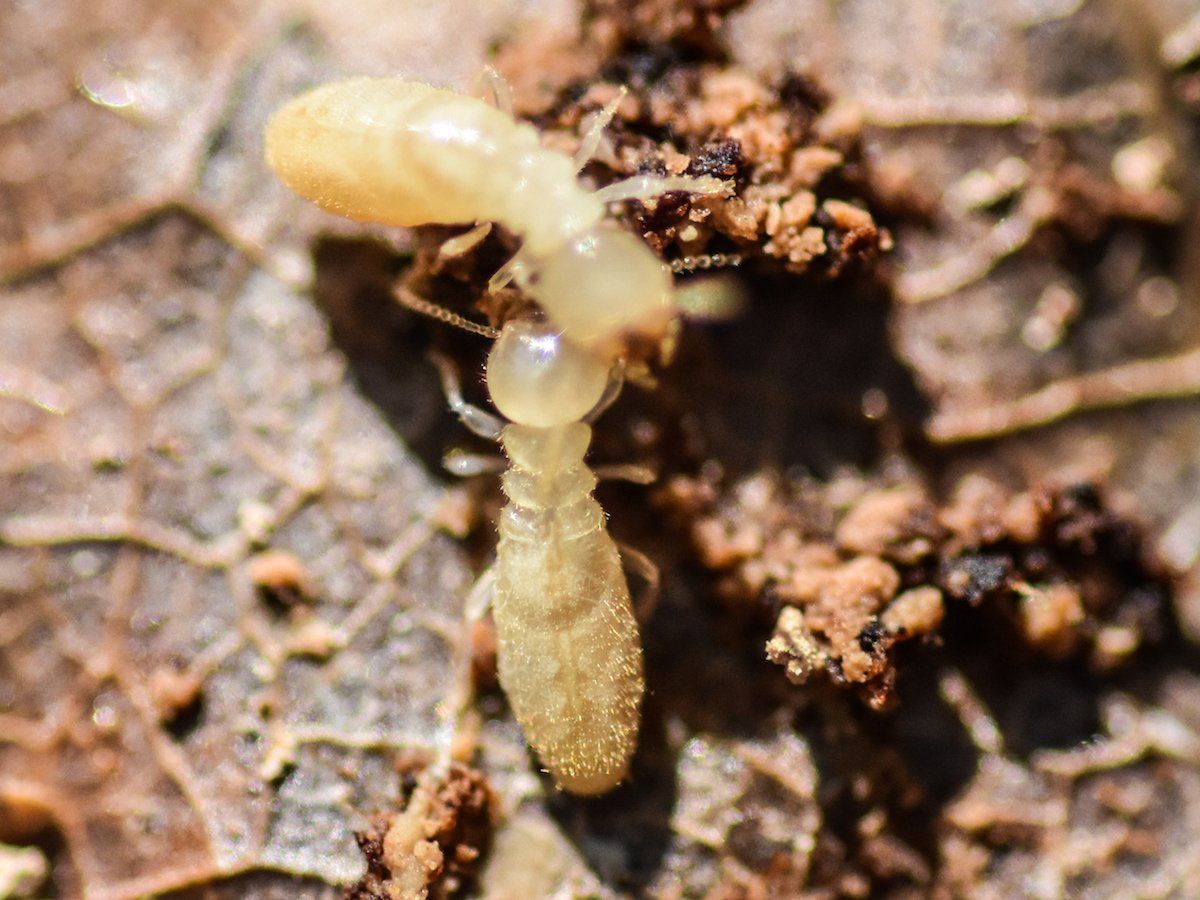
Subterranean termites are social insects that live in colonies containing caste systems. Typical colonies have three distinct castes: reproductives, workers and soldiers. The reproductives, including the queen and king, are responsible for mating and populating the colony. A queen is the largest and most important termite found in the colony, producing up to 1,000 eggs per day. The workers are the largest group in most termite colonies, repairing the nest, grooming and caring for nest mates, and foraging for food. Soldiers, equipped with huge armored heads and sharp, enlarged mandibles, defend the colony from attack. The queen may live for many years, and individual soldiers and workers may live one to two years. During certain times of the year, “swarmers” will emerge from colonies. These winged adult reproductives leave the current colony to form their own. They typically only produce a few eggs in the first year, but once the colony’s queen matures she will produce about 5,000-10,000 eggs a year. It typically takes several years, often between five and 10, before a colony reaches a mature size of at least 60,000 termites.   


Drywood Termites

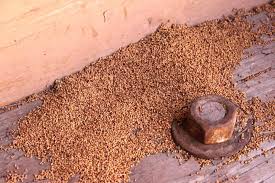
Drywood termites form colonies of up to 2,500 members. Unlike subterranean termite species, drywood termite colonies do not have a worker caste, as the work is done by immature termites before they reach adulthood. You may see drywood termite swarmers on sunny, warm days after a sudden rise in temperature.

Powder Post Beetle

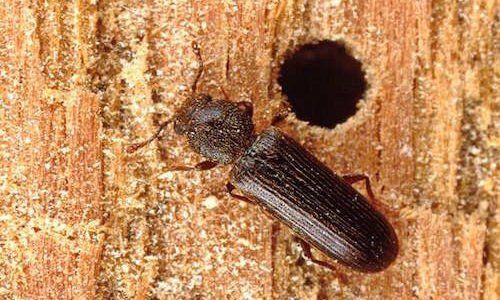
Powderpost beetles are second only to termites in their ability to damage dry, seasoned wood. And yet, customers often receive conflicting opinions about whether the insects and/or damage they are seeing is indeed due to powderpost beetles. Mistakes also are made in determining whether the infestation is active, and if so, how it should be managed. As a result, the pests may cause considerable confusion for homeowners, wood suppliers, manufacturers, builders, and even pest control companies. This publication explains how to make those determinations.

Dry Rot 

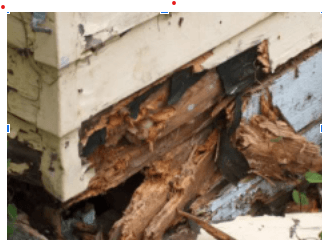
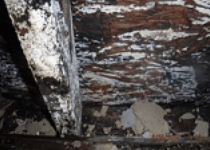
Dry rot is wood decay caused by one of several species of fungi that digest parts of the wood which give the wood strength and stiffness. It was previously used to describe any decay of cured wood in ships and buildings by a fungus which resulted in a darkly colored deteriorated and cracked condition. 

The life-cycle of dry rot can be broken down into four main stages. Dry rot begins as a microscopic spore which, in high enough concentrations, can resemble a fine orange dust. If the spores are subjected to sufficient moisture, they will germinate and begin to grow fine white strands known as hyphae. As the hyphae grow they will eventually form a large mass known as mycelium. The final stage is a fruiting body which pumps new spores out into the surrounding air. 


Fungus

A wood-decay or xylophagous fungus is any species of fungus that digests moist wood, causing it to rot. Some species of wood-decay fungi attack dead wood, such as brown rot, and some, such as Armillaria (honey fungus), are parasitic and colonize living trees. Excessive moisture above the fibre 

saturation point in wood is required for fungal colonization and proliferation. In nature, this process causes the breakdown of complex molecules and leads to the return of nutrients to the soil. Wood-decay fungi consume wood in various ways; for example, some attack the carbohydrates in wood and some others decay lignin. The rate of decay of wooden materials in various climates can be estimated by empirical models. 

Wood-decay fungi can be classified according to the type of decay that they cause. The best-known types are brown rot, soft rot, and white rot. Each produce different enzymes, can degrade different plant materials, and can colonise different environmental niches. Brown rot and soft rot both digest a 

tree's cellulose and hemicellulose but not its lignin; white rot digests lignin as well. The residual products of decomposition from fungal action have variable pH, solubility and redox potentials. Over time this residue will become incorporated in the soil and sediment, so can have a noticeable effect on the environment of that area.


Carpenter Ants 

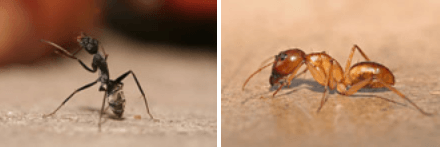
(Camponotus spp.) are large (0.3 to 1 in or 8 to 25 mm) ants indigenous to many forested parts of the world. 

They build nests inside wood consisting of galleries chewed out with their mandibles or jaws, preferably in dead, damp wood. However, unlike termites, they do not consume wood, discarding a material that resembles sawdust outside their nest. Sometimes, carpenter ants hollow out sections of trees. They also commonly infest wooden buildings and structures, and are a widespread problem and major cause of structural damage. Nevertheless, their ability to excavate wood helps in forest decomposition. The genus includes over 1,000 species. They also farm aphids. In their farming, the ants protect the aphids from predators (usually other insects) while they excrete a sugary fluid called honeydew, which the ants get by stroking the aphids with their antennae. 


Carpenter Bees

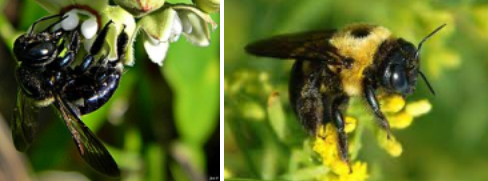
Carpenter bees are species in the genus Xylocopa of the subfamily Xylocopinae. The genus includes some 500 bees in 31 subgenera. The common name "carpenter bee" derives from their nesting behavior; nearly all species burrow into hard plant material such as dead wood or bamboo. The main exceptions are species in the subgenus Proxylocopa; they dig nesting tunnels in suitable soil.